HAMPSHIRE OFFICE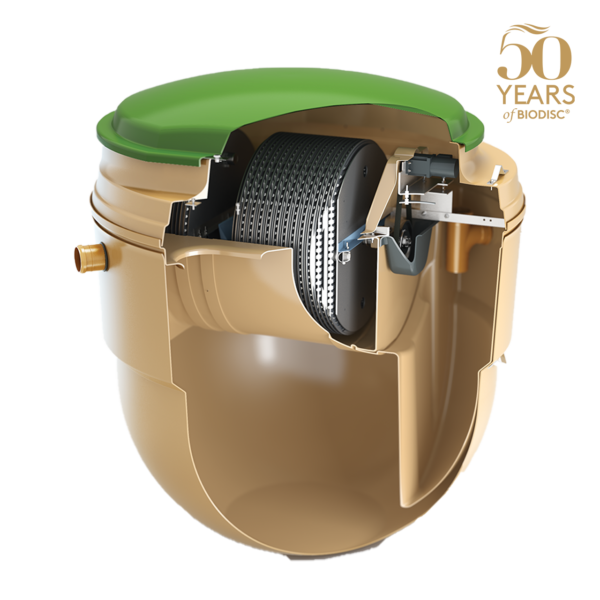


Description
Sewage Treatment Plants: Buyer’s & Technical Guide
If your property isn’t connected to a mains sewer, a sewage treatment plant is the most efficient and environmentally responsible way to manage off-mains drainage.
Whether you’re replacing an old septic tank to comply with General Binding Rules or installing a system on a new build, choosing the right plant ensures long-term reliability and complete regulatory compliance.
What is a Sewage Treatment Plant and How Does it Work?
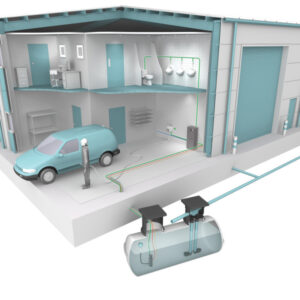
Unlike traditional septic tanks—which merely separate heavy solids from liquids—a modern sewage treatment plant uses an active biological process to clean wastewater before it leaves the tank.
Primary Settlement: Raw sewage enters the first chamber, where solids settle to the bottom and lighter oils/scum float to the top.
Biological Treatment: Liquid moves into the aeration chamber, where low-energy blowers oxygenate the water. This encourages naturally occurring aerobic bacteria to break down organic pollutants and harmful micro-organisms.
Final Clarification: The treated liquid flows into a final settlement chamber where remaining fine particles fall out of suspension, leaving clean, clear effluent ready for discharge.
Because the final effluent reaches such a high standard, it can usually be discharged directly into a local watercourse (a stream, ditch, or river) or into a drainage field, subject to Environment Agency guidelines.
Key Features & Advantages
Full UK & European Compliance: All our plants are fully tested to BS EN 12566-3 and UK Building Regulations (Binding Rules), ensuring your discharge meets stringent national standards.
Versatile Construction Options: Available in heavy-duty GRP (Glass Reinforced Plastic) or durable rotationally moulded polyethylene. Depending on site ground conditions, polyethylene options can often be backfilled with pea shingle or gravel rather than a concrete surround, saving significant time and installation costs.
Flexible Discharge Outlets: Choose between gravity-fed outlets for standard site falls or integrated pumped outlets if your discharge point sits higher than the tank outlet.
Standard & Shallow Inverts: We offer shallow-profile tanks designed specifically for challenging sites featuring high water tables or bedrock, reducing digging depth and keeping groundworks safe and affordable.
Low Running Costs: Equipped with reliable, low-energy air compressors and high-efficiency diffusers to ensure continuous oxygen circulation without running up high electricity bills.
Installer-Friendly Design: Built-in lifting eyes make handling straightforward on site, while integrated anti-buoyancy lips assist with secure anchoring into the ground surround.
Sizing Guide: Getting the Right Tank Size
To remain compliant with UK Building Regulations and Environment Agency rules, sewage treatment plants must always be sized based on the potential maximum occupancy of a property (the number of bedrooms), rather than how many people live there today.
Sizing follows the British Water Flows and Loads – 4 Code of Practice, measured in Population Equivalent (PE).
Single Dwellings
The absolute minimum baseline for any single domestic property is 5 PE (which covers up to a standard 3-bedroom home). For properties larger than 3 bedrooms, add 1 PE for each additional bedroom.
1 – 3 Bedrooms: 5 PE (Minimum system baseline) | 750 Litres/day
4 Bedrooms: 6 PE | 900 Litres/day
5 Bedrooms: 7 PE | 1,050 Litres/day
6 Bedrooms: 8 PE | 1,200 Litres/day
Important Rule: Manufacturers build tanks in set PE increments (e.g., 6 PE, 8 PE, 10 PE). If your calculation falls between sizes, always round up to the next available size. Undersizing a system will lead to premature soakaway failure and invalidates environmental consent.
Group Developments & Commercial Sites
Multiple Houses: When linking several homes to one system, peak usage evens out over 24 hours. For developments over 12 PE, British Water allows a calculation adjustment (e.g., total PE × 0.9 for 13–25 PE sites).
Commercial & Leisure: Pubs, restaurants, offices, campsites, and holiday lets carry very different organic loadings per person compared to residential homes.